
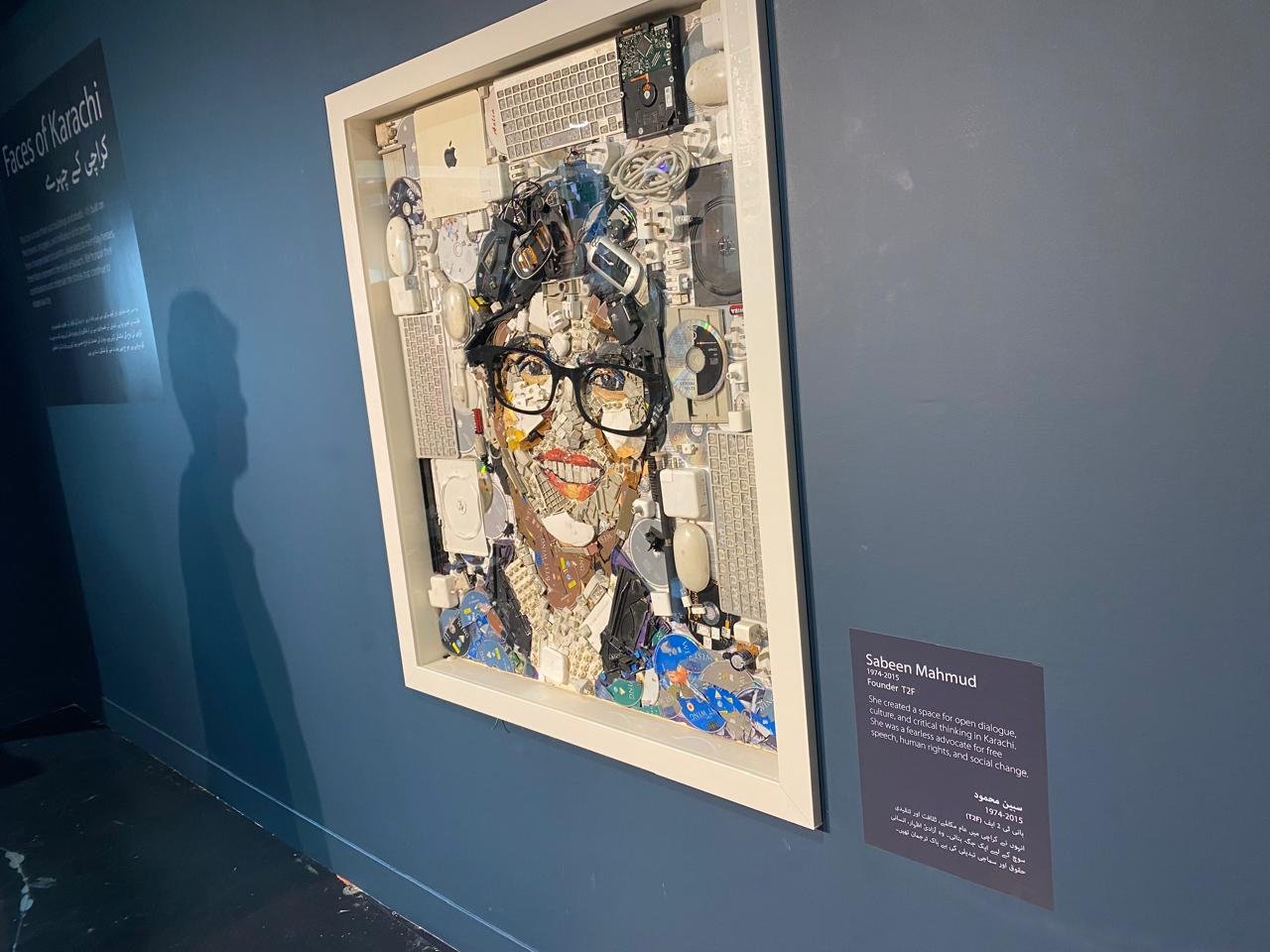
It has been ten years since Sabeen Mahmud was killed.
After she was brutally killed on a warm April night in 2015, close to her workspace in Karachi, her friends, colleagues, those who visited T2F as participants and audience to the dialogue sessions came together as community. Robust protests on streets and social media spaces were followed by statements of resolve to never let her voice die. This led to the arrest of the so-called perpetrator who was eventually tried and a sentence was announced. With time, her colleagues and the community she created – including those of us who were neither colleagues, nor friends, just “beneficiaries” of T2F, dispersed. T2F itself underwent a separate battle for sustainability. However, consistent efforts to revive the space have always been met with enthusiasm from the community.
Sabeen founded and ran T2F, through PeaceNiche, with a stated agenda to promote, “Intellectual Poverty Alleviation”. T2F did this through offering its space as a platform for dialogue and creative expression indiscriminately to all classes and sections of society. T2F was not the first and the last community space that Karachi has had. But what set T2F apart from others was that it had no gatekeepers discouraging access. It was not coloured by any political and ethnic affiliation. There was no fee for those who attended the sessions, no compulsion to make donations or buy items from the attached bookshop and café. It was a flexible built space for public meetings, art exhibitions, workshops, a quiet workspace, a chat with a friend, a movie showing, a jamming session or a conversation over political and civic issues, in a safe and respectful environment. In terms of service, the T2F team, under Sabeen delivered with utmost professionalism. All the activities at T2F were well planned and executed. Logistics, aesthetics, hygiene and security were taken care of. The space was as welcoming to corporate professionals and renowned artists as it was to fisherpeople movement and trade union activists. The organisation’s message was clear. It will provide space for any kind of dialogue and expression within the boundaries of respect and tolerance.
Sabeen is not the first person in the city to have been killed for reasons related to her work. Countless political workers, civil society activists, rights defenders and others have been attacked and lost their life for being perceived as threat to the forces that exercise violence fearlessly. That a person accused of killing her is rotting in jail may be a source of comfort for some, but that is where it ends. Regardless of exactly what part of her work led to her killing, the fact is that Sabeen’s death was closely linked to what she was trying to do for the city.
By way of social entrepreneurship, Sabeen was enabling a fractured city to rise above ethnic, religious and political affiliations, and engage. To not shy away from expressing love through mindless shairi. To appreciate music. To find humour in everyday mayhem. To share without fear. To apologize for an error and move on. To join protests and movements for solidarity, without carrying the baggage of association. To set healthy boundaries. To have a strong sense of right and wrong, yet not stop communicating even after an unpleasant exchange. To make an effort to understand others’ viewpoints and put aside judgment for a minute.
In an exchange I was witness to – as a part of a citizens’ collective to resist nuclear power plants that were being planned in 2014 close to Karachi’s cherished French Beach area – I noticed how she had internalized her commitment to dialogue. We had amongst us a member of MQM, who was suddenly being cornered by a bunch of disgruntled group members, while he was trying to speak. She interrupted the high pitched conversation with a polite but firm tone: “Let him speak at least,” she said and the temperature in the room started to cool down.
By way of social entrepreneurship, Sabeen was enabling a fractured city to rise above ethnic, religious and political affiliations, and engage.
Another interesting observation about Sabeen was how she did not want to be bracketed. In the early days of her killing, people, while in their outpouring of grief, described her as a human rights activist, an art and culture patron, a rights defender… Such statements were met with frustration from people close to her. They were of the view that she never used these titles as her introduction. But then how did she see herself?
As a part of a team working on archiving her life, I found a Facebook post that may give a glimpse into how she described what she did:
“I don’t owe anyone any explanations. However, in the interest of my sanity and to avoid responding to banal comments, I hereby state that I am an Experience Junkie. I go to MQM rallies, PTI rallies, PPP rallies, labour union rallies, leftie rallies, meek candle-light vigils, useless, counterproductive Press Club protests, and just about everything else that is available to be experienced. While I like individuals and ideas of several parties, I am not affiliated with and nor do I support any specific party. For those casting aspersions and jumping to conclusions, I suggest that you read about the perils of ‘moral certitude’…”
While she spent good eight years to help Karachi reinvent itself through her personal actions and entrepreneurial venture, it would be apt to look at what Karachi did for her on the eve of her tenth death aniversary. And how has the city really delivered on the slogan “her legacy will live on…” in the last decade.
The post Sabeen Karachi is heavily commercialized, corporatised and digitized. The city’s new found state of stability and security has led to a vibrant art and culture scene that is expanding every year. On social movements’ space, the city has also hosted several successful actions such as the Aurat March, the Climate March, the Karachi Bachao Tehreek and the consistent struggle against housing demolition. On the political landscape, MQM with its controversial past is no longer the mighty force it used to be. New actors such as the Pakistan Peoples Party and PTI have been asserting their space, while religious parties have lost steam to Karachi’s commercialization.
The post-Sabeen Karachi has also done its small bit of extending recognition to her by trying to respond to the efforts to revive T2F whenever there was an opportunity; by naming a road after her; and by religiously marking her birth and death anniversaries through music, art and collective activities. The post-Sabeen Karachi can also claim to have pressurized the authorities enough for them to really make an effort to nab her killer and ensure he does not go unpunished.
However, I do think that despite slogans such as “her legacy will live on…” and “we cannot be silenced”, the post-Sabeen Karachi has changed forever. In fact, these slogans gloss over the real loss that happened in the last week of April ten years ago. In its habitual bid to return to normalcy after every violent incident, the city has not undertaken any effort to acknowledge this loss: A violent act that extinguished a living, breathing individual in a matter of four seconds, and ruthlessly jolted all those associated with her, whether closely or remotely. Her death deeply changed the sense of safety that is critical for trusting and engaging with fellow citizens. Her death made the city realize the importance of being practical, rather than sentimental. This practicality is reflected in the silence that is displayed at the opportunity of organising political action. It is reflected in the act of overlooking and disengagement from issues that are bubbling up, making a low cry to be noted, and to mobilise around. While T2F, and other community spaces continue to exist, they remain mere built spaces that are not able to extend the generosity to allow an open and safe dialogue on contentious subjects.
There needs to be an acknowledgement that with Sabeen’s death, spirits have been crushed, that an organization has been orphaned, that a mother has been denied the right to be buried before her only child, that her killing was an extension of a decades long gun culture that remains unaccountable for, and that justice has not exactly been served because Sabeen’s killing was not the last ever target killing of a Karachi citizen.